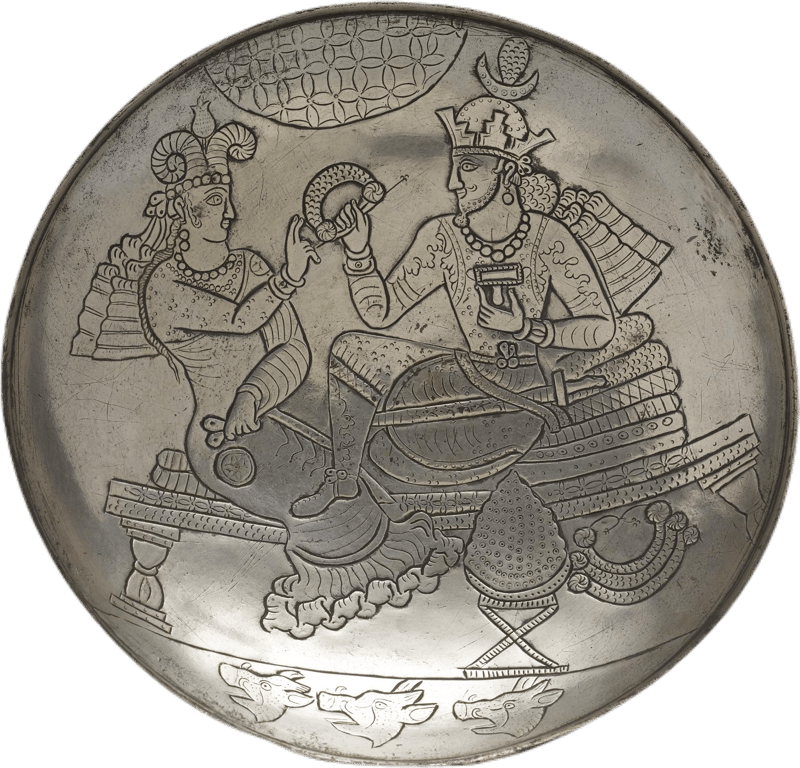
The Aryan marriage contracts provide some needed information about the legal position of the wife in the first millennium A.D.
1. We know by now marriage contracts in the Perso-Aryan world written in three different Aryan languages:
I. One comes from Bactria, is written in Bactrian, and dates back to the fourth century (Bact. A).
II. The other comes from noble backgrounds in Samarkand, is found on Mount Muγ, is written in Sogdian, and dates back to the early eighth century. It is indeed a marriage contract (Nov. 3) together with the accompanying guarantee letter (Nov. 4).
III. There are also two model marriage contracts compiled in Pārsīg, one in Persia, and the other in India, which reflect the actual practices of those of the Good Religion in the Sasanian times and after. In later times, the Parsis of Iran used another model contract marriage, called by them پدوند راینیداره (peyvann-rāyēnīdārīh). The Pāzand text is found in a number of manuscripts.
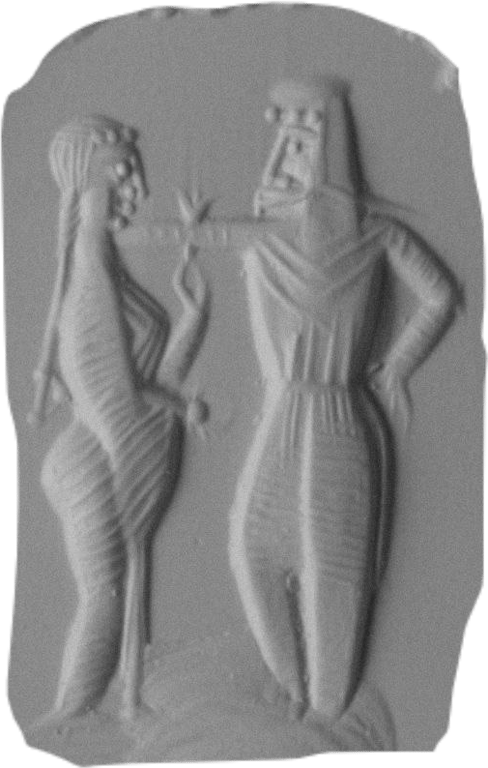
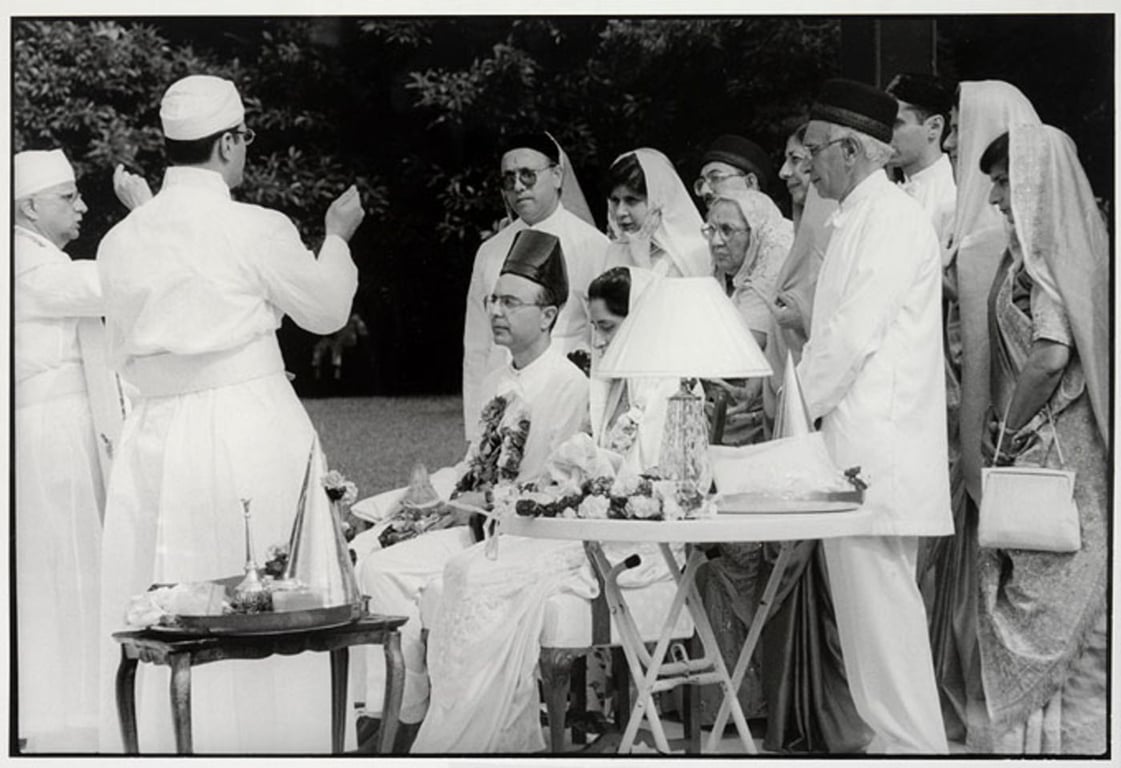
2. The word for “contract” is, in Pārsīg, pašt or peymān. In the Pārsīg document of Persia the term peymān ī zanīh is used to indicate the “marriage contract”. The Parsis of India use a model contract marriage, commonly known as āširvād paimān. The text of Āširvād is recited by two officiating priests. First, they ask questions from the father of the bridegroom, the father of the bride, and also from the couple (kadagxvadāy ud kenīg) —this is the part of the marriage contract. Then, the part of the priests' benediction starts.
In Sogdian, the “marriage contract/certificate” is called, vuδ-karnē, and in Bactrian, ολοβωστογο ˗these words confirm that Sogdian pōstē (or, karnē, or Bactrian πωστογο, or Persian peyvann-nāmag) in the legal sense of “marriage contract” should be in written form.
3. As we see from the three marriage contracts (except the model prenup of the Pārsīs of India), wedding in Ērānšahr was primarily a civil ceremony. The main purpose of the “marriage certificate” was to safeguard the rights of the spouses. Apart from the “contract”, marriage needed to be sanctioned by a religious ceremony in which some texts of benediction were recited. The tradition of blessing the new couple dates back to the Avesta —a “wedding song” is indeed found in the Gāθā (Y 53). The Aryan word for “benediction” is *āfriʜu̯ana- (Av. āfrivana- nt., Sogd. āfrivǝn, Parth. āfrīvan, Pers. āfrīn, Armen. օրհն /òrhn/). One text of benediction in Sogdian (found in Chinese Turkestān) reveals to be similar to the Āfrīn ī Vazurgān recited in wedding ceremonies of the Pārsīs. In general, the “civil” contract was preferably written, while the “religious” rite of benediction was often oral. The custom of written contracts was already well established among the various Perso-Aryans probably since the Achaemenian period.
4. The conclusion of a marriage agreement needed successive steps, the matrimonial suit, the conclusion of marriage, etc. The issues concerning matrimonial donation, dowry, divorce, inheritance rights should be concluded before the final act. They are parts of the family law in the Perso-Aryan world.
5. The future spouse, being in the company of his father or an old member of the family, presented himself as a petitioner to the girl's house, asking her guardian for her hand in marriage. There is a story about the wedding proposal of Zoroaster that can be regarded as a model:
abar xūbvizīnīh ī zan ārzōg ī xvēš ud kāmag-iz ī pidarān rāy; pēš az hān ī sazāgvindišnīh xvēš tōhmag nē gumixtan.
ēn-z pēdāg kū: ka-š pidar ōy rāy zan xvāst, Zardušt bē ō zan pehikārd kū-m rōy bē nimāyē [kū dā-š cihrag ud ēvēnag ud brahm, ēn-z kū-š cihrag hu-arzōg (/xvārum) ayāb nē, šnāsād].
u-š zan rōy aziš abar vašt.
ud Zardušt guft kū: «kē vēnišn az man abāz gīred, nē varzed hān ī man tarsagāhīh.»
— VZ 18
‘About: The right choice of a wife according to his own desire, and also the will of his parents; one should not mingle his seed before a proper finding.
This, too, is revealed (in the Avesta) that: When his father asked a wife in marriage for him, Zoroaster argued thus: “Show me your face!” [that is: so that he could check her appearance, fashion and form, whether her appearance is lovely or not].
But the woman turned away her face from him.
Then Zoroaster spoke thus: “whoever does not allow me to look at her, does not cultivate respect for me.”’
6. The request of the father bringing his son to the house of the bride is followed by the formula expressed by the father as well as by the son; in this way, the bride becomes “daughter-in-law” and at the same time “wife”, and the procedure is called, in Pārsīg, duxtagānīh (lit. ‘adoption as a daughter’) as well as zanīh (lit. ‘womanhood’). In the Pārsīg and Sogdian texts, the bridegroom addresses to the father (or, guardian) of the bride, and not directly to her. The solemn formula in the Bactrian document is a little different: The young man, without addressing the father or guardian of the girl, states that he takes the young woman like a spouse.
7. The Sogdian document contains stipulations referring to the dissolution of marriage by divorce. The contract grants a wife the right to take the initiative to demand divorce in the same way as the husband. The same document gives two separate clauses, one concerning divorce initiated by the husband and the other concerning divorce initiated by the wife.
8. According to the Sogdian document, the marriage was monogamous in the sense that the husband could not take a second legitimate wife. This stipulation did not exclude the possibility, for the man, of taking a concubine without the title of “legitimate” wife. On the other hand, the wife could refuse to allow him this possibility, claim a financial indemnity from him, and demand the ouster of the second wife or concubine.
9. The bride, after marriage, will become kadagbānūg, the mistress of the house, the mater familias. Pārsīg, Sogdian and Bactrian texts similarly call her “entitled” or “legitimate” wife: zan ī pādixšā, pātǝxšāvǝn vaδu, ϕινζο ϕρομανζο. This type of matrimony was with full matrimonial rights (matrimonium cum manu, Pers. zanīh ī pādixšāyīhā), i.e. the wife and the husband will inherit one another, the children are entitled to inherit their parent’s property, and the sons become legal successors of the father.
10. According to the Pārsīg text, in the cum manu marriage (pādixšāyīhā-zanīh) it is the husband’s duty to ensure his wife a decent and easy life. The bridegroom not only gives the bridegroom full right to an income, but he promises a gift from his property, half of it in advance in an undivided state, and half in cases of breakup of the marriage. The amount of the gift is subject to the approval of the bride. The Pārsīg word for this bridal gift is kābēn.
11. Another kind of matrimonial donation is dowry. The word for “dowry” is, in Bactrian, ναμαγγο. This word reflects Av. nāmǝni- f. ‘share’ from nam ‘to share, allocate’ (nǝmah- nt. ‘loan’) which is glossed by Pers. vāspuhragān pas(dād)agān.
12. In Sogdian, the word for “wedding” is βaγānīpǝšǝkǝrtē (or, βaγānīšpǝktē). The first part of this word, βaγ-, means ‘lord; god’; and while βaγānīpǝš literally means ‘divine son’, however it denotes ‘bridegroom, son-in-law’ and corresponds with Pers. kadag-xvadāy. Then βaγānēpǝšǝkǝrtē has nothing to do with βaγ- < *baga- ‘god’, but merely means ‘bridegroom-making, wedding’, corresponding with Pers. kadagxvadāyīh or vayū(da)gān.
13. There is a special form of legitimate marriage called, in Pārsīg, . The first element in the word is not bay/ baγ ‘god’ but bi° ‘two°’, and the whole word should be read biyaspān, continuing old Aryan *bi-(h)aspāna-, cf. Pers. (h)asp- ‘to rest, sleep’. In this kind of marriage, the agreement was between two people only, the bride (without the consent of her guardian) and her lover (gādār). Another term for this kind of marriage is xvasrāyēnīh. It may be the reminiscent of an older tradition of marriage by self-choice, practised among the “warriors”, as we can find in Persian stories (there was an open competition in this kind of marriage and the girl selected the best).
…
< The explanations given here are extracted from Raham Asha’s Marriage Contract: Pārsīg (Pahlavi), Sogdian and Bactrian documents, Dushanbe, Academy of Sciences, Tehran, Shourafarin, 2020, ISBN 978-622-6657-90-7.
To purchase, click here. >
 Made with Bullet