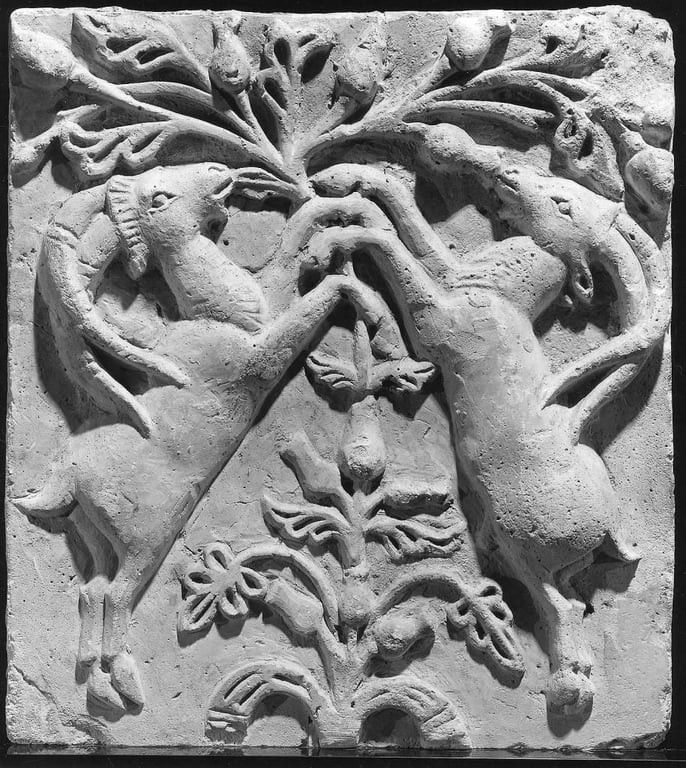
An animal fable, named draxt asurīg “The Assyrian Tree” survives in the Middle Persian literature corpus. It was originally composed in Pahlavānīg (Parthian), and is narrated in the form of a poetical contest. Here is given the text and translation.
pārsīg
1- draxt-ē rust est
tar ō Šahr Asurīg
2- bun-aš hušk est
sar-aš ast tarr
3- varg-aš nay māned
bar-aš māned angūr
4- šīrēn bār āvared
mardōmān vasnād
5- hav-am draxt buland
ud buz ō ham nibardīd
6- kū: az az tō abardar ham
ped vas gōnag xīr
7- u-m ped Xvanirah zamīg
draxt-am nēst ham-tan
8- cē šāh az man xvared
ka nōg āvaram bār
9- makūgān taxt ham
frasp ham vādbānān
10- gyāgrōb az man karend
kē virāzend mēhan ud mān
11- javāz az man karend
kē kōbend jō ud brinz
12- damēnag az man karend
ādurān vasnād
13- mōg ham varzīgarān
bālēn brahnbāyān
14- rasan az man karend
kē tō pāy bannend
15- cōb az man karend
kē tō grīv māzend
16- mēx az man karend
kē tō sarnigūn āgōzend
17- ēsm ham ādurān
kē tō kirb brēzend
18- tābestān āsāyag ham
ped sar šahriyārān
19- sik ham varzīgarān
angubēn āzādmardān
20- tabangōg az man karend
dārūgdān vasnād
21- šahr ō šahr barend
bizešk ō bizešk
22- āšyān ham murvīzagān
sāyag kārdāgān
23- astag bē abganam
ped nōg bun-am rōyed
24- ka hirzend mardōmag
kū-m bē nē vināhend
25- bašn-am baved zeryōn
yad ō rōz jāyēd
26- hav-iz mardōmag
kē-š nēst may ud nān
27- az man bār xvarend
yad hamburd avištend
28- ka-š hān vāxt būd
draxt asurīg
29- buz-am pesox kared:
sar-am frāz šaved
30- kū tū-iz ō man rānē
tū-iz ō man nibardē
31- ka ēd az man kirdagān
šnūd baved
32- nang ōy halag
soxan-at pehikārd
33- burz hē dēv buland
bašn-at māned dēv dēv
34- ka ped sar Šēd Jim
ped hō farrox āvām
35- druz dēvān bannag
būd hend mardōmān
36- draxt hušk-iz dār
sar-aš būd zeryōn
37- tū az ēd kirdagān
sar-t ast zeryōn
38- bē bār burdan sazed
dānāg az dušāgāh
39- yad ō kū baram bār
az tō buland abēsūd
40- agar-at pesox karam
nang-am baved grān
41- vāzend-am ped afsān
pārsīg mardōm
42- kū: vāš hē ud vadxrad
abēsūd draxt-ā!
43- agar tū bār āvarē
mardōmān vasnād
44- gušn-at abar hilend
ped ēvēnag-iz gāvān
45- xvad gumānīg ham
kū rūspīgzādag hē
46- ašnav ē dēv buland
yad az pehikāram
47- ka dādār bay varzāvand
bāmīg xvābar Ohrmazd
48- abēzag dēn mazdesnān
cē cāšt, xvābar Ohrmazd
49- jud az man kē buz ham
yaštan nē šāyed kēž
50- cē jīv az man karend
andar yazišn yazdān
51- Gōšurog yazad
harvīn cahārbāyān
52- hav-iz Hōm tagīg
nērōg az man est
53- hav-iz bār-jāmag
cē ped pušt dārend
54- jud az man kē buz hēm
kirdan nē šāyed kēž
55- kamar az man karend
azrāyend ped murvārīd
56- mōzag ham saxtag
āzādān vasnād
57- angustbān husrōgān
šāh hamhirzān
58- mašk-um karend ābdān
ped dašt ud viyābān
59- ped garm rōz ud rabih
sard āb az man est
60- maškīzag az man karend
kē sūr abar virāzend
61- stabr sūr vazurg
az man kirb virāzend
62- maškīzag az man karend
vasnād šahriyārān
63- ka xvadāyān ud dahyubedān
sar ud rēš virāzend
64- ped škōh ud āzarm
andar kanār dārend
65- nāmag az man karend
fravardag-dibīrān
66- daftar ud pādixšēr
abar man nibēsend
67- zīh az man karend
kē bannend abar drōn
68- varr az man karend
naxšag buz-pašmēn
69- kē āzādān ud vazurgān
abar dōš dārend
70- skuz az man karend
kē bannend zēnān
71- ka Rustahm ud Spendyād
abar bē nišīyend
72- kē ped meh pīl zandpīl
dārend sanvar ud vazr
73- kē ped vas kārezār
andar kār dārend
74- hambun-z nē višed
az bann zēnān
75- pilaxān ud kaškancīr
hav-am xīrān ēvēn
76- jud az man kē buz ham
kirdan nē šāyed
77- hambān az man karend
vāzārgānān vasnād
78- ke nān ud pist ud panīr
harvīn rōvn-xvardīg
79- kāpūr ud mušk syā
ud xaz tuxārīg
80- vas jāmag šāhvār
peymōzan kenīgān
81- ped hambān dārend
frāz ō Šahr cē Ērān
82- kustīg az man karend
hav-am spēd pedām
83- hō taškanag šāhvār
peymōzan vazurgān
84- hav-am vāšām kenīg
ped var grīv stāyend
85- ēg-um hamsardag
až amāh peyvann
86- tan avend bōyād
cōn gul ī gētīg
87- srūg-ē dah videst
abāz ō pušt dāram
88- kōf ō kōf šavam
vazurg kišvar būm
89- az kust ī hindūgān
tar ō Varkaš zreh
90- judsardag mardōmag
kē mānend tar ō būm
91- videstīg ud varcašm
kē cašm ped var ast
92- sar-aš ō sag mān
brūg-aš mān mardōmān
93- kē dār varg xvarend
az buz šīr dōšend
94- harv-iz mardōmag
zīvišn az man ast
95- pēšpārag az man karend
ō jō, hur, may
96- kē xvāred šahriyār
kōfiyār ud āzād
97- ēg-um bed abardar
az tō draxt asurīg
98- ud az šīr ud panīr
bed afrušag ud māst
99- dōg-am kašk karend
vasnād šāhīgānān
100- mazdesnān pādyāb
ped man pōst dārend
101- cang ud vin ud kinnār
ud barbut ud tambūr
102- hamāg zanend
ped man srāyend
103- ēg-um bed abardar
az tō draxt asurīg
104- ka buz ō vāzār barend
ud ped vahāg dārend
105- harv kē dah drahm nē dāred
frāz ō buz nē āsed
106- xurmā ped dō pešīz
kōdakān xrīnend
107- dānag ud astag tō šaved
frāz ō kōy murdān
108- ēn-um sūd ud nēkīh
ēn-um dahišn ud drūd
109- kē az man buz bē raved
tar im cē pahn būm
110- ēn-um zarrēn soxan
kē man ō tō vāxt
111- cōn kē pēš xūg varāz
murvārīd afšāned
112- ayāb cang zaned
pēš uštar mast
113- az bun abāz-rōn
kū ped bun-dahišnīh
114- kōfān carag šavam
ō hubōy kōfān
115- giyāh tarrōg xvaram
az xānīg sard āb
116- tū kust hē ēdar
kū jūlāhagān mēx
117- buz ped pērōzīh šud
xurmāg andar ō stōb
*
118- srōd-um kē burd
kē nibišt kē xvēš
119- dagr zīvād, ped harv srōd
sar dušmen murd vēnād
120- kē nihād ud kē nibišt
hav-iz ped ham-ēvēn
121- ped gētīg tan-husrō
ud mēnōg bōxtag-ruvān
ēdōn bavād.
English
1- A tree has grown
over in the Assyrian land
2- Its trunk is dry;
its top is moist.
3- Its leaves resemble canes;
its fruits resemble grapes.
4- It bears sweet fruits
for a people.
5- That lofty tree
and a goat contested together:
6- “I am superior to thee
in many regards.
7- In Xvaniraθa land
there is no tree of my stature.
8- For the kings eat of me
when I bear first fruits.
9- I am the plank for boats;
I am the mast for sails.
10- They make brooms of me
which sweep house and home
11- They make presses of me
which pound barley and rice.
12- They make fans of me
for the fires.
13- I am shoe for farmers;
I am cushions for the barefoot.
14- They make ropes of me
which bind thy legs.
15- They make clubs of me
which break thy neck.
16- They make pegs of me
which hang thee upside-down.
17- I am fuel for fires
which they roast thy flesh.
18- In summer I am shade
over the head of rulers
19- I am vinegar for farmers,
honey for noblemen.
20- They make boxes of me
for medicine bags.
21- They carry these realm to realm,
physician to physician.
22- I am a nest for little birds
shade for travelers.
23- If I drop a drupe,
my trunk will grow up anew.
24- If people let me,
that is, damage me not,
25- my height will be green
until the day eternal.
26- Even those persons
who have neither wine nor bread
27- eat fruit from me
until they become full.”
28- When that was said
by the Assyrian tree,
29- the goat replied
shaking the head:
30- “Thou fightest with me,
thou disputest with me.
31- When these deeds of mine
will be heard,
32- shame (on he who) with stupid
word disputed me.
33- Tall art thou, O lofty demon;
thy height resembles demons.
34- When at the beginning of Yima Xšaēta
in that happy period,
35- the devils and demons, servants
of the people they were.
36- even the tree with dry wood
its top was green.
37- From these deeds
let thy head be green!
38- But it is right that
the wise bears ignorant.
39- How long shall I bear thee,
O tall and useless!
40- If I make thee a reply
great shame will be to thee.
41- They tell about thee in a fable,
the Persian people:
42- Thou art straw and foolish,
O useless tree!
43- If thou bearest fruit
for people,
44- they maybe loose the male on thee
in the same way as with cows.
45- I indeed suspect that
thou art a courtesan’s offspring.
46- Listen, O lofty demon,
till I dispute.
47- The creator, the dignified Lord,
the radiant one, beneficent Ahura Mazdā
48- the pure Mazdayasnian Religion
which beneficent Ahura Mazdā taught,
49- except through me who am the goat
one cannot perform the Yasna ceremony.
50- For they make from me consecrated milk
in the Yasna ceremony of the gods
51- Gəuš Urvan, the god
of all quadrupeds,
52- and even the valiant Haoma,
their strength is from me.
53-Even the saddle-bags
which they have over the back,
54- without me, who am the goat,
one cannot make.
55- They make belts of me
which they adorn with pearls.
56- I am leather boots
for the nobles,
57- finger-stalls for the illustrious
and companions of kings.
58- They make my skin into water-bags;
in the plain and desert,
59- on a hot day and at noon,
cold water is from me.
60- They make table-cloths of me,
on which they arrange meal.
61- The opulent great feast
they adorn with my meat.
62- They make table-cloths of me
for rulers.
63- When kings and lords
dress their head and beard,
64- with glory and honor,
they keep me alongside.
65- They make letters of me,
the epistlers.
66- Registers and documents
they write upon me.
67- They make strings of me
which they bind upon bows.
68- They make mantles of me,
splendid, of fine wool,
69- which the nobles and great ones
wear over the shoulder.
70- They make straps of me
which fasten saddles.
71- When Rustahm and Spendyād
mount up,
72- who on huge elephants, furious elephants
hold crossbows and maces,
73- that in many battles
they hold in action.
74- Nothing may be opened
from the strap of the saddles.
75- Slings and ballistae
and things of that sort
76- without me, who am the goat,
one cannot make.
77- They make packs of me
for the merchants;
78- bread, roasted flour and cheese,
all the sweetmeats,
79- camphor and black musk
and Tuxārian marten furs,
80- many kingly garments,
dresses for maidens,
81- they keep in packs
on to the Aryan Land
82- They make the sacred girdles of me,
the sacred white masks too,
83- kingly shirts,
cloths for the great,
84- the scarves that maidens
praise on breast and neck.
85- Then, let my fellow-creatures,
out of our lineage,
86- their body smell as fragrant
as the flower Gētīg.
87- A horn of ten spans
I bear over my back.
88- Montane to mountain I go
big continents and lands,
89- from the Indians’ coast
over to the Vourukaša sea.
90- Humans of different species
who dwell beyond those lands,
91- the span-sized, the eye-chested
whose eyes are on their chest-,
92- those whose heads resemble a dog’s,
whose eyebrows resemble men’s,
93- who eat the leaves of trees,
milk the milk from the goat,
94- even these humans,
their livelihood is from me.
95- They make trimmings from me
for beer, koumiss and wine-
96- which kings eat,
mountain rulers and nobles.
97- Then once more I am superior
to thee, the Assyrian tree.
98- I am milk and cheese,
further, pastries and curds.
99- They dry my buttermilk
for the palaces.
100- The Mazdayasnians perform ablutions
on my skin.
101- Harp, vina and lyre
and lute and cither
102- each that they play,
they play on me.
103- Then once more I am superior
to thee, the Assyrian tree.
104- When they bring a goat to market
and offer it for sale,
105- whoever does not have at least ten drachma
does not come near the goat.
106- (And yet) dates, for two coppers,
the children buy!
107- Thy seeds and stones proceed
to the valley of the dead.
108- This is my use and goodness,
this my gift and welfare,
109- which issues from me, the goat,
across this wide earth.
110- This is my golden word
which I have told you
111- like one who, before a wild boar,
scatters pearls,
112- or who plays a harp
before a musth camel.
113- Since the beginning
that is, the primeval creation-
114- I go pasturing on the mountains,
the sweet-smelling mountains;
115- I eat fresh grass,
and (drink) cool water from springs.
116- Thou art nailed here
like a weaver’s peg.”
117- The goat departed in victory;
the date-palm went down in defeat.
*
118- Whoever sings my songs
whoever writes them, whoever keeps them for himself,
119- may he live long for each,
may he see his enemy’s head dead.
120- May he who bequeaths it and he who copies it,
be, in the same way too,
121- renowned of person in the world of life
and saved of soul in the world of thought.
Be it so.
Audio
 Made with Bullet