The story of the Jew and the Mazdayasn belongs to the Perso-Aryan religious polemical literature that flourished in the Sasanian times. It uses the frame tale to prove the truth of the Good Religion (dēn ī veh). It was translated by the Persian scribes into Arabic in the early Arab-Islamic caliphate, and is preserved in the Kitāb Sirr al-asrār (the Book of the Secret of secrets). It occurs in nearly identical form in the treatises of Iḫwān aṣ-Ṣafāʾ (9th century) and also in the Al-ʾImtaʾ wa al-Muʾanasa (Enjoyment and Conviviality. Tawḥīdī, 10th century).
The book Sirr al-asrār was translated into Latin, entitled Secretum Secretorum – the long version has been made by Philippe de Tripoli around the year 1230. It was later translated into (Old) English, (Old) French, etc. In these later versions, the Mage (Pers. muγ, Arab. majūs) was replaced by “Sarazin”, “Payen”, “Enchantere”. Notice that the Hebrew version of the Sirr al-asrār has omitted the story. A Persian version of this story is found in Awfī’s collection of anecdotes Jawāmiʿ al-Hikāyāt wa Lawāmiʿ al-Riwāyāt (13th cent. A.D.). For the Arabic and Persian versions, see the links below
Here is given a reconstruction of the original Pārsīg text (by Raham Asha).
pārsīg
(1) būd ī ka jehūd-ē jumā mazdesn-ē hamrāh šud hend. jehūd mard-ē būd škōh, ud payādag ud atōšag ud abēbārag hamē raft. ud mazdesn būd hangad, abar astar ī ray ī frahādag nišastag, hamāg bār ī rāh – az tōšag ud vastarg ud cē – bastag. ud ped rāh hamsoxan būd hend. mazdesn ō jehūd pursīd kū:
«hān ī tō kēš cē, ud vurravišn ī tō cōn?»
(2) jehūd guft kū:
«vurravišn ud kēš ī man ē kū: dānam kū ped asmān dādār-ē-m ast kē abesar ī dahišn abar sar ī man nihād ēsted, ud an peristagīh ōy kunam, u-š ped panāhīh gīram, ud mizd ud pih ī rōzīg az hambārag ī yān ī ōy xvāham, ud harv nēkīh az ōy xvēš rāy zayam, ud ōy-iz rāy kē ped kēš ud ristag ī man hamdādestān; bē harv kē-š kēš hambasān, ā-m pādixšāy xūn ī ōy rixtan ud xvāstag, zan ud frazend ī ōy stadan, u-m nē pādixšāy ayyārīh ī ōy kirdan, ayāb abāg ōy uskārdan ayāb hambaxtan, ayāb mihr ud dilsōzag ud abaxšāyišn pediš burdan.»
(3) ka jehūd ēdōn bē guft, ō mazdesn pursīd kū:
«tū-iz kēš ud vurravišn ī xvad gōb dā-m pēdāg bē baved.»
(4) mazdesn guft kū:
«an vurravam kū xvad ud hamāg mardōmān rāy nēkīh abāyam; ud ēc dām ud dahišn vad nē menam, ud kas-iz anāgīh nē xvāham, cē hamkēš cē judkēš. vehīh ud nēkīh, cand tuvān hād, ō dōst ud dušmen handāzam. agar az kas must-ē vēnam, tāvān nē handāzam, ud kēn nē tōzam, ud pādifrāh ī ōy bē vehīh enyā nē kunam. vurravam kū hamāg dām ī gētīg nēk sazed pahristan; cē ka gyānvar-ē bēšend, an bēšumand bavam. ud harv mardōm ud dām rāy šādīh ud drustīh kāmam.»
(5) jehūd guft kū:
«bē agar-t bēš ud āzār ud ōrēz kunend?»
(6) mazdesn guft kū:
«abēgumān ham kū gētīg rāy dādār-ē ast visptuvān ud dādīg ud vispāgāh ī-š ēc kār ī gēhānīgān, xvard ayāb stabr, keh ayāb meh, nē nihuftag; kirbakkarān ped vehīh pādāšnēned, ud anākkirdārān ped vadīh pādifrāhēned.»
(7) jehūd guft kū:
«soxan-t xūb, ud vurravišn-it nēk. bē kāc rāstīh gōbišn-it abāg būd hē!»
(8) mazdesn abd sahist:
«cōn-t nišān ī drōv dīd?»
(9) jehūd guft:
«ēnak, an ham tan-ē az hamcihrān ī tō. ud tū xvad abar bārag ī rāhvār nišastag, ud sāzag ud tōšag az gōšag ī pālān ābixtag, u-m bahr aziš nē baxšē, u-m zamān-ē ped bārag ī xvad nē nišāyē. pēdāg kū ped vurravišn ī xvad nē ravē!»
(10) mazdesn guft:
«ōhāy, rāst gōbē.»
(11) pas mazdesn az astar frōd mad, ud xvarišn sāzag frāz vistard, ud xvarišn ud āb ō jehūd frāz burd dā jehūd sagr būd. pas jehūdag abar bārag nišāst, ud xvad payādag hamē raft. u-šān soxan hamē vyāvurd. jehūd dā nišān ī māndagīh ped cihrag ī mazdesn dīd, astar ped avištāb bē rānd, ud ōy ī mazdesn ēvtāg ped dašt bē hišt.
(12) acārag vāng kird kū:
«pādāšn ī nēkīh vad mā kun, u-m andar ēd viyābān ēvtāg mā hil kū-m dad kušād ayāb az anābīh anast bavān!»
(13) jehūd guft kū:
«nē-t guft-am kū kēš ī man ē kū harv kē-š kēš hambasān, ā xūn ī ōy šāyem rixtan ud xvāstag ī ōy man rāy sazed?»
(14) ēd bē guft ud hamzamān pāydār grān kird, ud astar bē rānd dā az cašm ī mazdesn apēdāgīhist. ōy acārag zamān ēcand az pas ī gard ī ōy šud, dā didīgar hān gard nē vindād.
(15) ka az vindišn ī jehūdag anumēd būd, nišast, rōy ō asmān kird ud guft:
«yazdā ! hān ī-m kird, ōstīgān ped hudāgīh ī tō kird. guft-am kū gētīg rāy dādār-ē ast ī pādifrāhēnīdār ī hudāg ī pādāšnēnīdār ī xvābar; ō kirbakkarān nēkīh handāzed, ud vadgarān puhl zaned. parmānag ī man ped ēn dar abārōn mā vardēn, ud dād ī man az ōy ī mustegar bē stān!»
(16) ka ēn niyāyišn ud xvāhišn bē kird, rōy ō rāh nihād, ud bē raft. ka ēk do frasang raft, astar ī xvad dīd kē jehūdag az pušt ī xvēš abgandag, hannām ī ōy hamāg xastag ud škastag, ud andar vēm ī anastīh ōbastag; ud astar anī gyāg ēstādag, hangār kū ō rasišn ī xvadāy pand pād hē. mazdesn cōn hān estām dīd ped rōy ōbast, u-š vāng ī šādīh ō asmān burd. pas abar bārag nišast, u-š jehūdag ped vēm ī anastīh hišt, u-š astar rānd.
(17) jehūd vāng abgand kū:
«brādarā! man agar vad kird, bē-z abāg xvad kird. cōn man rāy az vadīh nēk nē mad, ud tō rāy az nēkīh vad nē jast, ud bar ī huvurravišnīh ī tō ō tō frāz mad, u-m tāvān ī dušvurravišnīh ī xvēš ō man abāz mad, nūn dastyārīh ī kēš ī xvad kun, u-m andar ēn viyābān atōšag mā hil!»
(18) jehūd and bē nālīd cand-iš mazdesn abaxšīd, u-š ōy abar astar ī xvēš nišīyēnīd, ud ō šahrestān āvurd ud ō nazdīkān ud xvēšān ī ōy abespurd.
frazaft ped drūd.
English
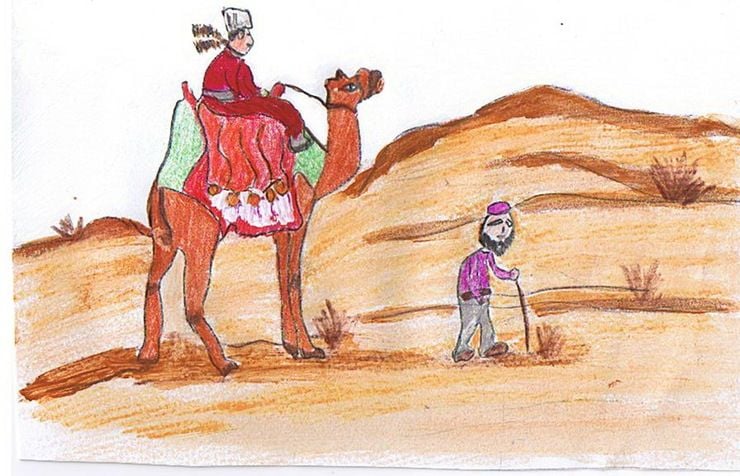
(1) Once upon a time, a Mazdayasnian and a Jew were going together on the journey. The Jew was indigent, on foot, without any provision and without mount. The Mazdayasnian was opulent and was riding on his mule – trained at his liking – ; and he had on the mule all his necessaries for travelling – provisions, clothing, etc. As they went speaking together by the way, the Mazdayasnian said to the Jew:
“What is your creed and belief?”
(2) The Jew answered him:
“My creed and belief is thus that I know in heaven is my one god who has put the crown of creation over my head, and that I serve him, I put my trust in him, and I request my daily earn and bread from the hoard of his favour, and I seek from him all goodness for myself and those agreeing with my creed and sect. But he who is of different creed, it is lawful to me to shed their blood of and take their possessions, wife and children, and it is unlawful to me to help them, or advise or consult them, or to have any friendship, sympathy and compassion for him.”
(3) When the Jew said so, he asked the Mazdayasnian:
“You tell me of your religion and creed so that it be known to me.”
(4) The Mazdayasnian said that:
“I believe that I wish well to myself and to all others; and I do not wish ill to any creature, and want no evil for anyone, neither my correligionist and nor to any of other religions. I do good and well to friend and foe as much as I can. If I see bad from someone, I do not consider compensation, do not hold grudges, and don’t punish but do nothing but good to him. I believe that all creatures should be treated well; for when an animal is harmed, I become affected. And I wish for all humans and animals happinness and health.”
(5) Then said the Jew:
“But if they do you harm, suffering and distress?”
(6) The Mazdayasnian said:
“I am doubtless that there is an all-powerful, just and all-knowing god for this world, and to him no worldly matter, whether big or small, inferior or superior, is hidden. The righteous he rewards for their goodness, the wicked he punishes for their evil deeds.”
(7) The Jew said:
“You spoke very well, your faith also is good. But may these words have been accompanied with truth!”
(8) The Mazdayasnian was surprised:
“What sign of lie did you see?”
(9) The Jew said:
“Behold, I am one of your fellow kind, and you yourself are sitting on a walking mount, your tablecloth and luggage hung from the saddle’s corner, and you give nothing of it to me, and do not sit me on your mount for a bit. It’s clear that you do not follower your beliefs!”
(10) The Mazdayasnian said:
“Indeed. You are right.”
(11) Then the Mazdayasnian unmounted the mule, spread his tablecloth, and gave him food and drink ’till he was full. Then after, he mounted the Jew on his mule and himself walked afoot. And they started talking. When the Jew saw a sign of tiredness in the Mazdayasnian’s face, he hastily rode the mule and left the Mazdayasnian alone in the plain.
(12) The poor man ran after him calling out:
“Do not answer my goodness with evil, and leave me not alone in this desert to be killed by a beast or perish from thirst!
(13) The Jew said:
“Did I not tell you that my creed is so that however is not of another religion I can spill their blood and their wealth suits myself?.”
(14) He said thus, and at the same time weighted the stirrup and rode the mule forth until he vanished from the Mazdayasnian’s sight. The poor man followed his dust until he could not find his trail no more.
(15) When he gave up hope of finding the Jew, he sat, lifted his face up to heaven and said:
“O’ God! What I did, I did relying on your beneficience. I said that there is a vigilant, beneficient, rewarding and clement god of this world; gives good to the rigtheous, and punishes the wicked. Do not turn over my belief in this and take my right from that oppressor!”
(16) When he prayed and asked thus, he faced the road and went on. Having gone one or two parasangs, he saw his own mule had thrown the Jew off of his back, all of his organs were injured and broken, and he had fallen in the cave of perishing; The mule was standing somewhere else, as if awaiting the arrival of its owner. When the Mazdayasnian saw thus the sound of his exultment reached to sky. So he mounted the animal, left the Jew in the gulf of perdition and rode the mule forward.
(17) The Jew cried so:
“O’ brother! Even though I did bad, I verily did harm to myself. For from that evil I did not obtain any good, and from your goodness you did not receive any evil, and the result of your good belief has come forward to you, and the compensation of my bad belief has come back to me. Do assist your own creed, and leave me not helpless in this desert!”
(18) The Jew lamented for a while so that the Mazdayasnian forgave him, sat him upon his own mule, took him to the city and gave him to his close ones and relatives.
 Made with Bullet