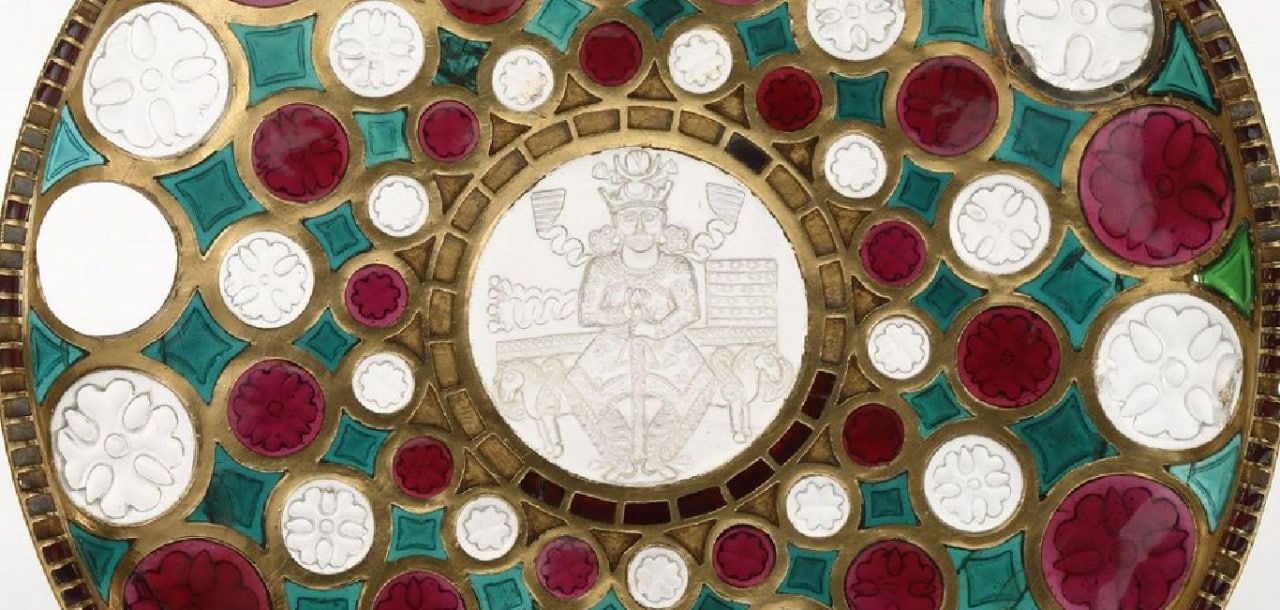
The regalia of royalty — an example
by Raham Asha
The insignia of the sovereigns were first served to represent the sovereign authority. The Avesta term for “insignia” was the same as for “royal power”, xšaθra. They then served to enhance the sovereign power and splendour, so that the realm and work of the sovereign seemed wonderful (Av. abda-) and excellent (Av. fraša-).
The Persian kings had in their hands a stick which stood for the king’s power to guide and punish (right hand) and a flower of water lily (left hand); these two resemble the aštrā and suβrā of Yima. The insignia imperii of the Persian kings were the robe, crown, shoes, parasol, throne, royal seal, bow, shield, wheel, etc. These insignia were passed on through generations symbolizing the transmission of power. For example, the new Persian king wore during the royal initiation the robe of Cyrus the Elder. On the south door of the central building of Persepolis we find an Achæmenian king under his parasol so that the sun could not directly shine on him.
There is a “magical” power in the ornamentation of kingship, as if it does not allow the enemies to prevail, and it is related to the (eschatological) renovation of the world, frašō.kərəiti. Darius hoped what he had done, it might appear fraša to everyone (DSa 4-5).
The remarkable treasures of the king were twelve in number.
Tabarī has enumerated twelve jewels of the reign of Xusrō II (Husrav Abarvēz, Χοσρόης the Young of the Byzantine writers, reign. 591-628 A.D.).
In a Pārsīg treatise, Māh fravardīn rōz ī hurdād (MFRH) it is said that:
māh fravardīn rōz ī hurdad 18 tis ped 18 sāl ō Husrav ī Ohrmazdān rased.
— MFRH 27
“In the month of Fravardīn, on the day Hurdād, 18 things came to Xusrō, son of Ohrmazd, during 18 years.”
<In India, “eighteen” is an auspicious number. Kauṭilya’s Arthaśāstra I, 12 mentions eighteen titles of high officials.>
The Persian authors have preserved for us in their chronicles, in Arabic and in Persian, the account of the treasures and jewels of Xusrō. The subject of 18 remarkable things of Xusrō has been studied in some details previously.
Here a list of them:
- A throne named Tāgdēs (lit. ‘arch-like’).
- A crown (Pers. tāg).
- A horse named ׊ēd (‘sorrel’). (شبدیز)
- The lady Šīrēn. The romance of Xusrō and Šīrēn was well known centuries later in Persia. In India the queen or wife (bhāryā) was one of the jewels (ratna) of the king. For example in Brahmāṇḍa Purāṇa, I, 2, 29, 76 we find:
“(The seven jewels of a king) having life are mentioned as follows: The queen, the purohita (chapelain), the general, the charioteer (rathakṛc lit. ‘chariot-maker’), the councillor, the horse and the elephant.”
- The treasures (Pers. ganz) of Xusrō. Xusrō possessed a number of tresures: Vādāvurd (lit. ‘brought by the wind’), Gāv (‘cow’), white (Pers. arus), green (Pers. zeryōn), burnt (Pers. suxtag), silk brocade of Xusrō (Pers. dēbāg husravīg), big carpet (Pers. šādvard), Kayus, Frāsyāb.
- A stable (Pers. āxvarr).
- A white elephant named Kadezād (‘home-born’). According to the KAP 1.13 the sun and the equipped white elephant are signs of mastery, power and victory.
- The gold which can be pressed by hand (Pers. zarr ī dastafšār/muštafšār).
- The towel which can be washed by fire (Pers. āduršust).
- The jug of wine which never becomes empty (Pers. purābag). A similar jug was one of the seven remarkable things of Yima.
- The palace (Pers. āyvan) of Xusrō.
- The chief musicians (Pers. huniyākkar), Sargaš and Pārbed.
- The nine seals (Pers. muhr) of Xusrō.
- The royal banner (Pers. drafš ī kayān/kāvayān).
- The seraglio (Pers. šabestān) of Xusrō.
We can speak of some other remarkable things yet, the backgammon board, the chessboard, etc.
< See also Brahmāṇḍa Purāṇa, I,2,29,76:
“(The seven jewels of a king) having life are mentioned as follows: The queen, the purohita (chapelain), the general, the charioteer (rathakṛc lit. ‘chariot-maker’), the councillor, the horse and the elephant.”
Also In India, an elephant of a whitish color was a preferable ratna.>
About the throne Tāgdēs
In the Persian tradition these three insignia go back to Θraētaona: a cow-headed mace (Pers. gurz ī gāvsār), a seven-eyed belt (Pers. kamar ī haft-cašmag), and a throne (Pers. taxt).
The king who succeeded him, sat on this throne, and added something to it. During the reign of Vīštāspa, his wise minister Jāmāspa engraved on it the celestial sphere, the stars and constellations, the motions of the sun, moon and planets as viewed from the earth (the first model of the “planetarium”). This throne can be compared with that of the Indian king Vikramāditya, a gift from god Indra, on which the cosmos was symbolically represented. The throne of Θraētaona came down up to the time of Alexander who destroyed it. When Ardašēr restored the Persian kingdom, he decided to restore the old throne; Xusrō the Victor finally completed the Cosmic Throne which was destroyed by the Christian emperor of Byzantium, Heraclius. The cosmic throne Tāgdēs captured the imagination of the Persians for many centuries.
— Ferdōsī (10th century), in the Šāhnāma, gives a detailed account of the “reconstructing” of the throne by the order of Xusrō. Xusrō assembled 1120 artisans, with 30 apprentices under each to set it up within Asprēs (= race-course, hyppodrome). They worked for two years over the throne. The throne was 100 royal arš (or, 170 arš) in height, and 120 arš in breadth.
On each of the 30 days of month, in the morning, one special carpet (representing the Yazata of that day) was spread upon it.
When the sun entered Aries, the plain was behind the throne, and the garden before it.
When the sun entered Leo, the back was turned toward it.
In autumn (Tīr-māh), the time for fruit and festival, the throne stood fronting toward the garden and the fruits to catch their scents.
In winter, the throne was closed. On the top of the throne was a clockwork apparatus showing the relative positions and motions of bodies, fixed or wandering, in the sky.
Tāgdēs consisted of three platforms enriched with gems (representing three stations of heaven, and also three classes of the Aryan society), and from one platform to the next there were four steps of gold inlaid with jewels.
- The first platform was called Mēšsār, because its ornaments were shaped like heads of ewes; it was the seat of “the rural chiefs and the subordinates” (vāstryōšān).
- The second was called Lāzvard, ‘lapis-lazuli’; it was the seat of the cavaliers (arsēštārān).
- The third was Pērōzag, ‘turquoise’; it was the seat of high priests and ministers (āsrōnān).
— Taʿâlibî (10th-11th c.), in his History, mentions among the marvels of Xusrō the throne Tāgdēs. According to him, on the top of the throne stood a canopy made of gold and lapis lazuli, representing the sky and the stars, the signs of zodiac, the seven continents, and as well the image of the kings in different attitudes, in the banquet or in battle or hunting. There was also a clockwork apparatus showing the hours of the day. The throne itself was covered with four carpets in brocade embroidered with gold and adorned with pearls and ruby, and each of these carpets was related to one of the seasons of the year…
ومنها تخت طاقديس وهو سرير من العاج والساج وصفائحه ودرا بزيناته من الفضّة والذهب وطوله مائة وثمانون ذراعاً وعرضه مائة وثلثون ذراعاً وارتفاعه خمس عشره ذراعاً و [في] مراقيه سرر من الشيز والآبنوس مضببه بالذهب وعليه طاق من الذهب واللازورد فيه صور الفلك والكواكب والبروج والاقاليم السبعة وصور الملوك وهيئاتهم في المجالس والحروب والمتصيّدات وفيه ما يدل علي معرفة ساعات النهار وله اربعة نسط علي مقداره من الديباج النسيج المرصّع باللآلئ واليواقيت يختصّ كلّ واحد منها بما يشاكله ويوافقه من فصول السنة
— H. Zotenberg, Histoire des rois des Perses par Al-Thaʿâlibî
— ثعالبی، غرر اخبار ملوك الفرس , Paris, 1900: 698-99
<Eng>
— The Mujmal
پس کار خسرو سخت بزرگ شد و هیچ پادشاه را چنان خواسته و گنج و زینت نبود، و تعظیم که او را بود، و تفصیل آنچه از وی بازماند در خزینه در آخر نویسیم به جایگاهی، مالی آن را اندازه پیدا نبودست، اما مختصری از دیگرها ذکر کنیم:
تخت طاقدیس بودش. و او تمام بساخت، و آن را قصه دراز است که ابتدا به عهد جمشید کردند، و افریدون بدان زیادتها کرد و از آن بهری به روم افتاد، و به ترکستان گستاسف از جنسی دیگر بساخت، و خسرو از همه جای آن را باز جست و تمام کرد، چنان که اهل عالم اندر آن خیره بودند، و روایت است که هزار خروار زر تمامت در آنجا کرده بود، (بیرون) از جواهر که قیمت آن بی غایت باشد; و دوازده هزار زن در شبستان او بودند از بنده و آزاد و در جمله مریم دختر ملک روم، و بهرامدخت، و کردویه، و شیرین که تا جهان بوده است کس به نیکویی او صورت نشان نداده است ...; و هجده هزار اسب بر آخور بودش، و در جمله خاصگان چون شبدیذ آنکه به کرمانشاهان صفت او بر نقش کرده است...; و نهصد پیل بودش به روزگار، و در جمله پیلی که آن را کذیزاد خواندندی...; و دوازده هزار استر بارکش بودش...; و خسرو پرویز را ز آنچه هیچ ملوک دیگر نبود کوز ابری بود هرچند از آن شراب و اگر آب فرو کردندی هیچ کم نیامدی; و دستارچه آذرشب (آذرشُست) و آن از موی سمندر بافته بود; زر مُشت افشار کی بر آن مهر نهادی و بر سان موم بود. و از جملهٔ گنجها، چون گنج عروس و گنج بادآورد و گنج کاووس و گنج افراسیاب و دینار خسروانی و این هر یک را قصهای است که چگونه بودست و چگونه به دست افتاد.
— مجمل التواریخ و القصص، م. بهار، تهران، 1318، 79-81
— Nezāmī (12th century), the Xusrō u Šīrēn.
<دیوان کامل نظامی گنجوی، تهران، 1355، نشستن ِ خسرو بر تخت ِ طاقدیس، 239-241>
….
— The Book of Marvels.
شیز: شهری است میان مراغه و زنجان، در میان کوهها نهاده. و آنجا معدن زر و سرب و زرنیخ و جیوه و جمست بود، ولیکن هیزم عزیز بود. نقره کم گدازند. سور ِ وی گرد در آمده بر دریایی کوچک، و آتشخانه ای بزرگ و تخت کی خسرو آنجا بود، تختی برنجین به دو گردون کشیدندی در آنجا نهاده بود، و جام گیتی نمای. تا روزگار گبران سر آمد و اسلام ظاهر شد، گبران بترسیدند از غارت آن. آن را در بحیره ای انداختند که در شیز است و دیگر کس آن را ندید.
— محمد ابن محمود همدانی، عجایبنامه، جعفر مدرس صادقی، تهران، 1375، 458
— Georges Cedrenus (11th century) gives an account of the “temple of sun” in Ganzag, after the city was taken by Heraclius. Byzantine soldiers found there the treasure of Croesus, king of the Lydians, the image of Xusrō in the form of a sphere, representing the king as sitting in heaven, around which the sun, the moon, and the stars were roaming, and with the king were the “angels” with sceptres in their hands; the Persians had prepared engines to cause to fall in drops like rain (representing the star Tištrya vārāngirdār), and to make a sound like thunder.
Heraclius persequens, bellatores interficit, fugientes dissipat, vrbemque Gazacum capit. Ea in vrbe fuit fanum Solis, thesaurus Crœsi Lydorum regis, & impostura carbonum. Ingressus autem in eam, abominandum offendit Chosroæ simulacrum, & effigiem eius in globi formam referente palatij tholo tanquam in cælo sedentem. circum errant Sol, Luna, & astra, quibus ille superstitiosus tanquam diis seruiebat, circumstantibus sibi angelis sceptrigeris, machinas porro impius parauerat, quæ ex eo loco guttas pluuiæ instar emitterent, sonitumque tonitrus æmulum ederent.
— Georgii Cedreni, Historiarvm Compendii, Parisiis, 1647, tomvs I: 412.
<English>
— Jacobus de Voragine (13th century), in his Golden Legend, recites the details of the story (and propaganda) of the bearing of the cross of Jesus from Jerusalem to Persia by Xusrō the Victor, and the onslaught of Herclius. He describes Xusrō as the king who subdued to his kingdom all the realms of the world, and he who would be of all the people as a god.
It is read in libro de mitrali officio:
Xusrō, resident in his throne as a father, set the tree of the cross on his right side instead of the sun (viz., the svastika representing the sun), and a cock (representing Sraoša) on the left side instead of the Holy Ghost, and commanded that he should be called father.*
< Notice that in the Avesta, Miθra is associated with Sraoša and Rašnu: On his right is Sraoša, and on his left Rašnu (Yt 10.100) –but in Yt 10.126 Rašnu is on his right. The cock and dog are the “material” aspects of Sraoša and Rašnu. About the association of the cock and dog, see Bd 157. About the relation of Sraoša and the cock see Vd 18.22-23. See also MJF 2.25 hān xrōs xvānend murvag ī srōšahlāy ‘They call it “cock”, the bird of Sraoša aṣya.’>
Xusrō made a tower of gold and of silver, wherein precious stones shone, and made therein the images of the sun and of the moon and of the stars, and made that by subtle conduits water to be hid, and to come down in manner of rain. And in the last stage he made horses to draw chariots round about, like as they had moved the tower, and made it to seem as it had thundered. Xusrō abode in this temple, and delivered his realm to his son (confusion of the Sasanian king Xusrō with Kay-Xusrō/ Av. kavi haosravah), and set the cross by him, and commanded that he should be called god, of all the people. And then Heraclius the emperor assembled a great host and came for to fight with the son of Xusrō by the river of Danube. And finally he broke that tower, and gave the silver to them of his host, and gave the gold and precious stones for to repair the churches that the tyrant had destroyed (the usual excuse of the Christians).
Cosdroe rex Persarum omnia regna terrarum suo imperio subjugavit, Jerusalem autem veniens a sepulchro domini territus rediit, sed tamen partem sanctae crucis, quam sancta Helena ibidem reliquerat, asportavit. Volens autem ab omnibus coli ut Deus, turrim ex auro et argento interlucentibus gemmis fecit et ibidem solis et lunae et stellarum imagines collocavit, per subtiles etiam atque occultos ductus quasi Deus aquam desuper infundebat et in subterraneo specu equi quadrigas trahentes in circuitu ibant, ut quasi turrim moverent et tonitruum simularent. Filio igitur suo regno tradito in tali fano profanus residet et juxta se crucem domini collocans appellari ab omnibus se Deum jubet et, sicut legitur in libro de mitrali officio , ipse Cosdroe in throno residens tanquam pater lignum crucis sibi a dextris imposuit loco filii et gallum a sinistris loco spiritus sancti, se vero jussit patrem nominari. Tunc Eraclius imperator exercitum copiosum collegit et contra filium Cosdroe juxta Danubium fluvium dimicaturus advenit. … Turrim rero illam destruens et argentum in praedam sui exercitus tribuens , aurum vero et gemmas ad reparandum ecclesias , quas tyrannus destruxerat, reservavit.
— Jacobi a Voragine, Legenda Aurea, Lipsiae, 1801, Cap. 137, (606) :
<English>
 Made with Bullet